When your dog has IVDD, you can find yourself watching every movement, hoping they look more comfortable or need a little less help. You want to know whether BPC-157 could make a difference alongside the care they're already receiving.
First, what IVDD can do to movement
The discs between the bones of the spine help cushion movement. When disc material herniates, it can press on the spinal cord or nearby nerves. Depending on the problem, a dog may have pain, difficulty walking or more severe loss of function. Cornell explains how disc disease develops.
That is why IVDD involves more than sore muscles. The spinal cord carries signals between the brain and body. Pressure and injury can interfere with those signals, changing what your dog can do independently.
Care depends on the diagnosis and neurological condition. It may involve restricted activity and pain management or surgery. The ACVIM guidance on acute thoracolumbar disc extrusion explains how treatment decisions depend on the individual case. BPC-157 research does not show that a capsule removes the physical pressure from a herniated disc.
How BPC-157 could support inflammation control and recovery
BPC-157 is a small peptide, a chain of 15 amino acids. Researchers have explored its effects on tissue injury and recovery, including experiments involving the spinal cord.
Two questions make this interesting for someone caring for a dog with IVDD: can the response to an injury become less damaging, and can injured nervous tissue retain or recover useful function?
Limiting the reaction to injury
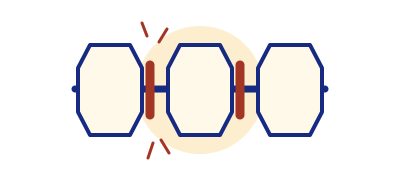
An injury can be followed by swelling and further tissue damage. Researchers call that continuing response secondary injury.
In rat spinal-cord experiments, BPC-157-treated animals had less swelling and bleeding in the assessed tissue. Those findings are part of the interest in limiting damage after the initial injury. Spinal-injury findings.
Preserving useful nerve function
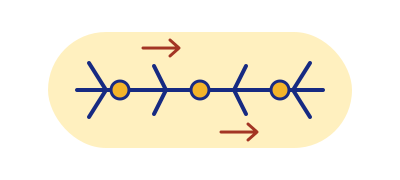
For an owner, tissue recovery matters because of what it could mean for a dog's ordinary life: needing less help or moving more comfortably.
A rat compression-injury study reported better tail movement and less microscopic nerve-tissue damage after BPC-157. It measured function alongside tissue changes. Function and tissue findings.
Two spinal-injury findings worth knowing
Rat spinal-injury study
Better tail movement after spinal injury
After lower spinal-cord compression, treated rats showed better tail movement and tissue findings. Assessments continued through one year.
- Studied in
- Rats
- How it was given
- Single injection into the abdominal cavity
- Type of study
- Controlled compression-injury experiment
Rat spinal-injury study
Tail-function recovery with treatment by mouth
Rats given BPC-157 in drinking water from day four showed tail-function recovery during follow-up through day 30. Separate experiments examined earlier treatment and tissue changes.
- Studied in
- Rats
- How it was given
- Separate injection, stomach-delivery and drinking-water experiments
- Type of study
- Controlled compression-injury experiments
These experiments involved induced injury in rats, and the papers share investigators. Tail-function recovery is encouraging, but it does not establish restored walking in dogs with naturally occurring IVDD.
The oral experiment is a reason to investigate effects beyond the gut. It does not give us a recovery timetable for your dog. Our oral-versus-subcutaneous comparison explains what route differences can and cannot tell us.
What improvement can look like at home
Start with what your dog is already allowed to do. Recovery notes should fit the existing activity and handling instructions, rather than create new tests for your dog to perform.
| When it happens naturally | What you might notice | Context to keep |
|---|---|---|
| Resting in their usual place | Settling more easily or less difficulty finding a comfortable position | Medicines, bedding and whether someone helped them reposition |
| An allowed bathroom trip | The assistance they need and any change in their usual movement | The prescribed support and restrictions, the surface and whether help changed |
| Moving within the permitted routine | A change in hesitation, coordination or how much support they need | Record only activity already allowed by the care team; note "not attempted" when restricted |
A brighter day does not automatically mean the back is ready for more activity. Keep following the restrictions even if your dog looks eager to do more. Do not add stairs, longer walks or balance challenges just to see whether they can manage.
If a movement happens naturally within the plan, a short video may help explain a change. Record the assistance you gave, too. A supported step and an independent step are different observations, and either needs context.
Use the weekly observation journal for notes, adapting the chosen activities to your dog's restrictions. New or worsening pain, weakness or urinary difficulty belongs in a prompt call, not at the end of a week of tracking.
Keep the whole recovery story together
When you hear that a dog is "walking again," you naturally want to know what helped. Look for what was diagnosed, whether surgery took place, what medicines or rehabilitation were involved and what the dog could do before and afterward.
An improvement can matter enormously without proving which part of care caused it. Keep changes in treatment beside changes in comfort and movement. That gives you a clearer picture than remembering only the best day.
Where Rewind fits
Our goal with Rewind is to help older dogs keep enjoying their familiar routines. The spinal-injury findings explain why BPC-157 interests us; they are not clinical results from Rewind in dogs with IVDD.
You can explore the ingredient guide, study library and safety information for more detail. At home, keep a simple record of comfort and the help your dog needs during their permitted routine, while following the care plan for their actual back problem.